
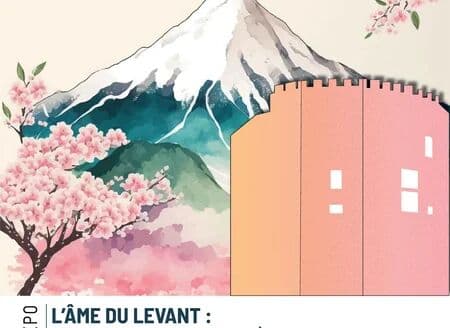
The Soul of the Levant: the Japanese imagination at work.
- art
- exhibition
 Show & CultureShow & Culture
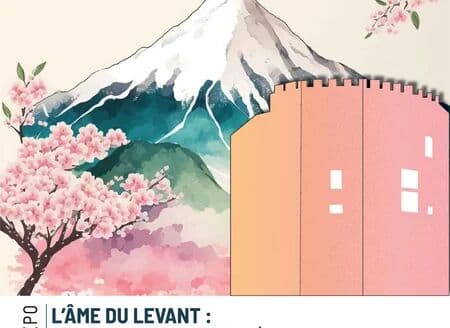
During the Meiji era, Japan opened up to the rest of the world. For millennia, the country had kept its doors closed, allowing only a few Dutch people to trade. But faced with the Western threat, particularly from the United States, Japan’s leaders chose a peaceful solution by signing trade treaties. This marked the decline of feudal power and ushered Japan into a new era, characterized by industrialization and technological advances. This opening to the Western system modernized Japan. Conversely, the rest of the world discovered an astonishing civilization that fascinated people as much through its ancestral traditions as through its way of life and artistic culture. Little by little, Japan revealed itself to a select few, who discovered it through the adventurers and collectors bringing prints and objects back to the West, along with numerous photographs and paintings. Artifacts from the Land of the Rising Sun sparked unprecedented enthusiasm among the European and American bourgeoisie, giving rise to immense collections. Japanese art, which was virtually unknown, transformed artistic circles. The Impressionists and the Nabis were fascinated by the asymmetry of the compositions, flat areas of color, forms outlined in black, traditional motifs … However, this discovery remained fairly confidential and reserved for a few cultivated elites. It was necessary to wait for the dissemination of Hokusai’s Manga and prints, followed by the 1867 Exposition Universelle, for France as a whole to encounter Japan. The latter renewed the experience in 1900. These events were extensively covered by the press, enabling the greatest number of people to discover this astonishing culture, so different from the West and, precisely because of these differences, so fascinating. The decorative arts, particularly the art of fire, hastened to offer objects inspired by Japanese artistic traditions. However, these were no longer the chinoiserie of the Ancien Régime, but rather works using references, motifs, and techniques derived from Japanese models, integrated into the aesthetic explorations of the major movements of the early 20th century.